Beyond Blast Overpressure: The "Underpressure Flux"

By Todd Strader Founder, OverPressured LLC; Advocate, Cohort of Overpressured Warfighters
Raleigh, N.C. - We live among these blasts; so, we know what they do not. We are bound only to our own; so, we say what they cannot. We bear the full weight; so, we must do what they will not. We are the Cohort of Overpressured Warfighters… welcome to the Flux.
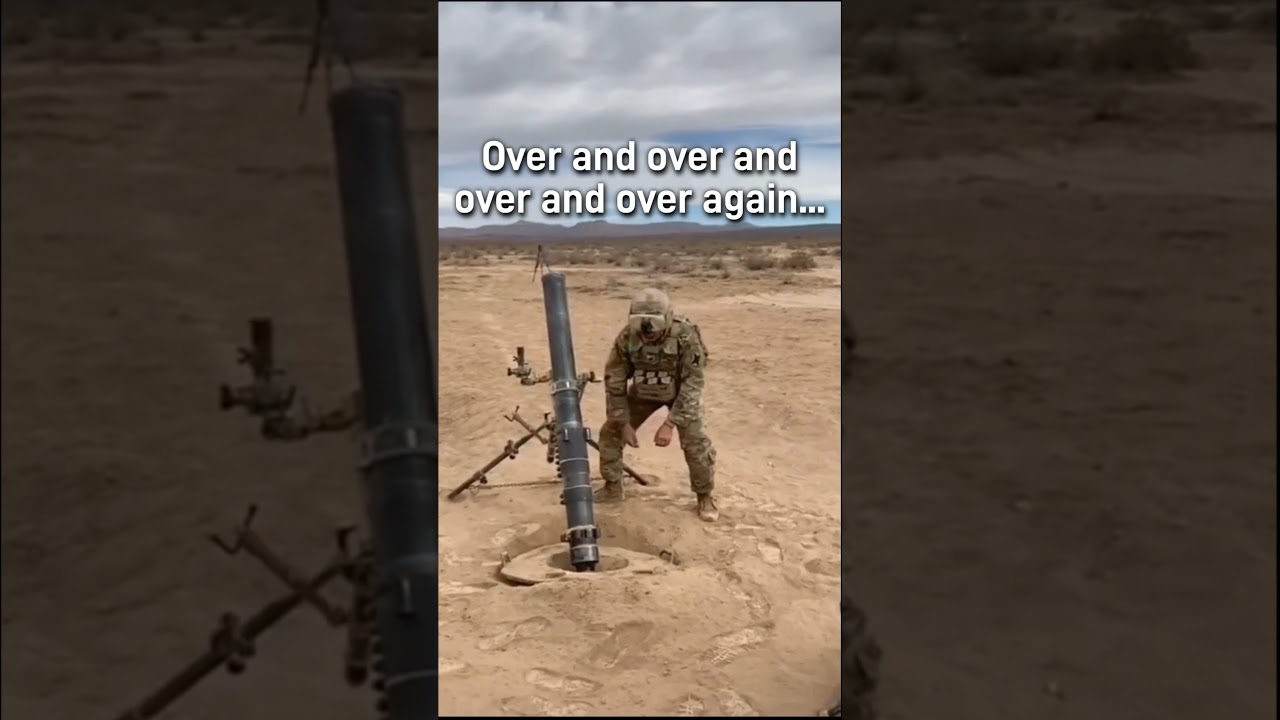
In the military, powerful guns like mortars, artillery and shoulder-fired rockets, even “fifty-cal” rifles make a big boom when they’re fired. The driving force behind these modern projectile weapons is small, controlled explosions that are super-hot, think surface of the sun hot, and moving super-fast, fractions of a second. The instant this hot, dense explosion meets the open air it expands extremely violently and fast; it’s called a “low-level blast”. The service members who operate these weapons of modern warfare as their military occupation can be exposed to thousands upon thousands of these blasts over their enlistment. It is the cumulative effects that are most insidious and far-reaching. In fact, the dynamic mechanisms behind this repetitive low-level blast and its effects are so complex that after nearly a decade of research, they still don’t know what to call it.
Our Cohort, having lived among these blasts as a part of our service to this country, we and our loved ones alone shoulder the true burden of its vile effects. We continue to be told that “science” can find no link to brain injury, but we know there most certainly is. What’s in-between us is that one plus one does not equal two in the currently incomplete understanding of repetitive low-level blast. Till now, research has primarily looked at one aspect of blast; the first punch out of what is really more like a 3-punch combo that I’m calling, the “Underpressure Flux”. Hear me out…
Let’s get back to the blast; here comes the boom… as those super-heated gases hit the open air, normal atmospheric air pressure is rapidly and violently condensed and pushed outwards in all directions. This primary pressure wave causes a sudden, sharp rise in the normal atmospheric air pressure. It’s called “Blast Overpressure”, and it’s the first punch, a right-cross to the brain that hits with a visible force that can crack concrete. Think of it as your body being hit by a fast wave of water. The bigger the blast, the stronger and faster the wave- “blast-wave”.
Over a decade of research by the nation’s top scientists has taught us a thousand things about blast overpressure and its effects, and yet science still struggles to find a name for this uniquely complex type of traumatic brain injury because the sum does not equal the parts, here’s why: The first punch blast dishes out to the brain is overpressure, it’s a brute and it hurts, but don’t forget that low-level blast is really a 3-punch combination. And it’s the two follow-up punches that I believe are the real “hurt-locker”, explaining the mechanisms behind the enigma I’m calling “flux TBI”.
In the blast, after the overpressure hits and passes through the soldier standing there, it sucks all the air out behind it and air pressure around them sharply drops to nothing and for a fraction of a second, they are in a vacuum or zero air pressure. This is the second punch, a lightning-fast left jab, the negative pressure wave or Underpressure and we are in the “flux”.
The human brain is about the size and weight of a cantaloupe, one that feels like varying consistencies of tofu, folded in- and over- itself over and over. When the brain is exposed to zero air pressure or vacuum, even for an instant, its soft liquid-filled tissue expands very rapidly, a violent outwards tensile pull on the brain that stretches white/gray matter junctions and neural networks like a rubber band.
Punch One is overpressure, it hits hard- jolting the brain. A fraction of a second after is Punch Two, underpressure; pulling it like suction cups…
Back in the blast, the blast overpressure violently pushes outwards, briefly creating a negative pressure vacuum. Milliseconds later the overpressure dissipates, collapsing the vacuum as earth’s normal atmospheric air pressure comes crashing back in like a tidal wave, snapping the brain back to its normal state, like letting go a rubber band. This is the third and final punch in our blast-flux combo; a right jab that lands hard, ringing the brain like a bell.
In this super rapid contraction, tiny, invisible bubbles that formed in the brain's delicate fluids during the vacuum’s pull are violently imploded, it’s called “cavitation”. In less than a blink of an eye, as the brain violently returns to its normal state, countless microscopic implosions generating tiny shockwaves and powerful fluid jets tear apart individual brain cells and their vital connections.
Low-level blast’s powerful right-cross jolts the brain, then a quick left-jab pulls it, and finally an equally fast right-jab snaps it back… over and over and over again, to varying degrees of magnitude. A broader view of this uniquely brutal process provides a much more vivid picture of repetitive low-level blast and its effects on the brain, the ‘Underpressure Flux’ behind ‘flux TBI’.
The chilling truth about this microscopic 'hurt-locker' is confirmed by the meticulous work of Dr. Daniel Perl, a distinguished neuropathologist at the Uniformed Services University. His examinations of post-mortem military brains are the gold-standard and they consistently reveal a unique and telling signature: Interface Astroglial Scarring (IAS). This scarring is found precisely where those microscopic implosions and violent stretching would do their worst, causing a cumulative shearing effect at:• Junctions where brain tissue meets fluid-filled spaces, areas where the underpressure-driven expansion would initiate cavitation, with bubbles forming and then violently collapsing against these delicate interfaces.• Junctions where the brain's gray matter meets its white matter. These areas are exceptionally vulnerable to the differential movement caused by rapid expansion and contraction. Even a minuscule, rapid shift of just 0.1 millimeters at these junctions, repeated across countless exposures, accumulates into significant, debilitating damage over time.
Beyond Dr. Perl's vital findings, numerous studies further corroborate the principles of the Underpressure Flux. Cutting-edge computational models, including finite element models and fluid-structure interaction simulations, are increasingly simulating the complex pressure dynamics within the brain during blast exposure. Researchers like Panzer and Marsh have used these models to demonstrate how negative pressure phases can induce cavitation and generate high strain rates, particularly at fluid-tissue interfaces. These simulations show that the violent collapse of these bubbles creates localized shockwaves and fluid jets that damage neurons and axons, aligning with the "violent snap back" of the Underpressure Flux. This understanding builds upon the foundation of existing TBI research by offering a more complete picture of blast’s unique impact.
Repetitive low-level blast exposure pounds the brain viciously fast with a 3-punch combination, not one impressive haymaker. A relentless series of micro-impacts that take an unseen, profoundly insidious toll. The human cost of this overlooked mechanism is immense. Veterans and Service-Members, often without a single visible scar of trauma, grapple with debilitating symptoms: persistent headaches, tinnitus, memory problems, difficulty concentrating, and unexplained mood swings. Because this microscopic brain damage from the Flux can evade detection by standard MRI and defies currently antiquated diagnostic assessments, these veterans remain victims of an "invisible wound"- one that leaves them feeling misunderstood, isolated and without clear answers or adequate support.
So, what’s the problem? Like all human endeavors, science and its drivers can be self-serving and fickle; they stumble here because the Flux defies their methodology as it cannot be repeated and measured in a controlled lab environment. So, we are told a connection to blast exposure and brain injury does not exist, that there is “merely an association” and this will have to suffice until their ‘method’ says otherwise. The irony here is that science fully embraces the largest unmeasurable and unrepeatable explosion of all; the Big Bang, which science and its funders tell us shaped our entire reality. Somehow here, the sum does indeed equal the parts, so the unseen must be true.
Why the double standard?? Well, to be fair, repetitive blast research is a relatively new field of science, a true ‘terra incognita’; and so, we must wait while they nuance over what and how to test and debate then how to test and debate it. But it’s also because the forces guiding the research lean on this confusion to protract endless studies that seem to usually ‘elude’ but rarely ‘conclude’. Institutional controls prefer to lean on the pillar of “plausible deniability”; to obscure the cold, hard truth- that these modern weapons of war are in fact, an extreme health hazard to those we ask to operate them on our behalf. Moreover, the general public cannot seem to process there is no way to have one without the other. As long as we humans wage war, we will always have these big weapons, and they will always be a health hazard to those that operate them; this is the inescapably inconvenient reality that all involved must come to terms with.
The actuarial culprit in occupational military blast exposure is not simply the initial blunt force of an overpressure wave. It is the insidious, cyclical internal stresses within the ‘Underpressure Flux’. The brain’s rapid jolt then rapid expansion and contraction; a unique process generating microscopic, cumulative damage sometimes manifesting years after exposure, silently undermining the health, readiness, and future well-being of our military and veteran communities.
Our Cohort of OverPressured Warfighters has learned that awareness is not enough, we must also act. This full understanding is vital for everyone involved:• For Warfighters and Veterans, it finally validates their silent struggles, offering a clear scientific explanation for their invisible burdens and empowering them to seek and demand appropriate specialized care and compensation.• For Military Leadership, we the affected are not naïve, we understand that these exposures are the “nature of the beast” if you will. But be that as it may, this full understanding of what is happening demands urgent re-evaluation of current safety standards, training practices, and the design of protective gear. New solutions must focus on damping or mitigating these specific internal pressure fluctuations and tensile forces, not just external impacts.• For Healthcare Providers, it clarifies the mechanisms behind the injury, paving the way for advanced diagnostics and imaging capable of detecting subtle brain dynamics and more effective treatments. This should include the widespread DoD & VA adoption and understanding of specific diagnostic codes like ICD-10 S06.8A: Primary blast injury of brain, not elsewhere classified.• For Policymakers and Legislators, this fuller understanding of the elusive "mechanism of injury" is the critical information needed to justify new legislation that calls for robust funding for breakthrough research and comprehensive, long-term support for our blast-exposed Cohort. This isn't just a health crisis; it impacts our national defense readiness and carries immense future costs if unaddressed.
The fight against these invisible wounds among our Cohort of OverPressured Warfighters is far from over. In fact, it’s only the end of the Beginning. The Underpressure Flux, presented for your consideration widens the aperture- providing the clearer picture needed to bring justice, healing and peace to those harmed in our service simply by virtue of their military occupations.
… but wait, there’s more! The true and full framing of low-level blast exposure extends beyond the boom... now, let’s talk about the suffocating toxic smoke & dust these blasts create.
Please support the Blast Overpressure Accountability Act (BOAA) and the Blast Overpressure Defense Act (BODA).