OverPressured
Home / The science
The science

The Science Is Evolving. The Need to Reduce Exposure Isn't.

Research into blast overpressure continues to advance our understanding of acute exposure, repetitive low-level blast, environmental effects, cumulative dose, why individuals respond differently, and potential neurological and physiological consequences.

Rather than treating blast exposure as a single-event problem, OverPressured approaches it as a system: from how blast energy propagates and interacts with the environment to the exposure experienced by the individual warfighter.

Our mission

More than peak pressure

Get relief to the warfighter now: reduce the blast pressure and impulse reaching the warfighter during repeated occupational exposure, and quantify that reduction under controlled conditions.

There is still considerable work to be done. The Department of War and NATO have both identified that significant gaps exist in feasible protective countermeasures.

We are actively involved in the scientific community, conducting the studies that drive our engineering efforts.

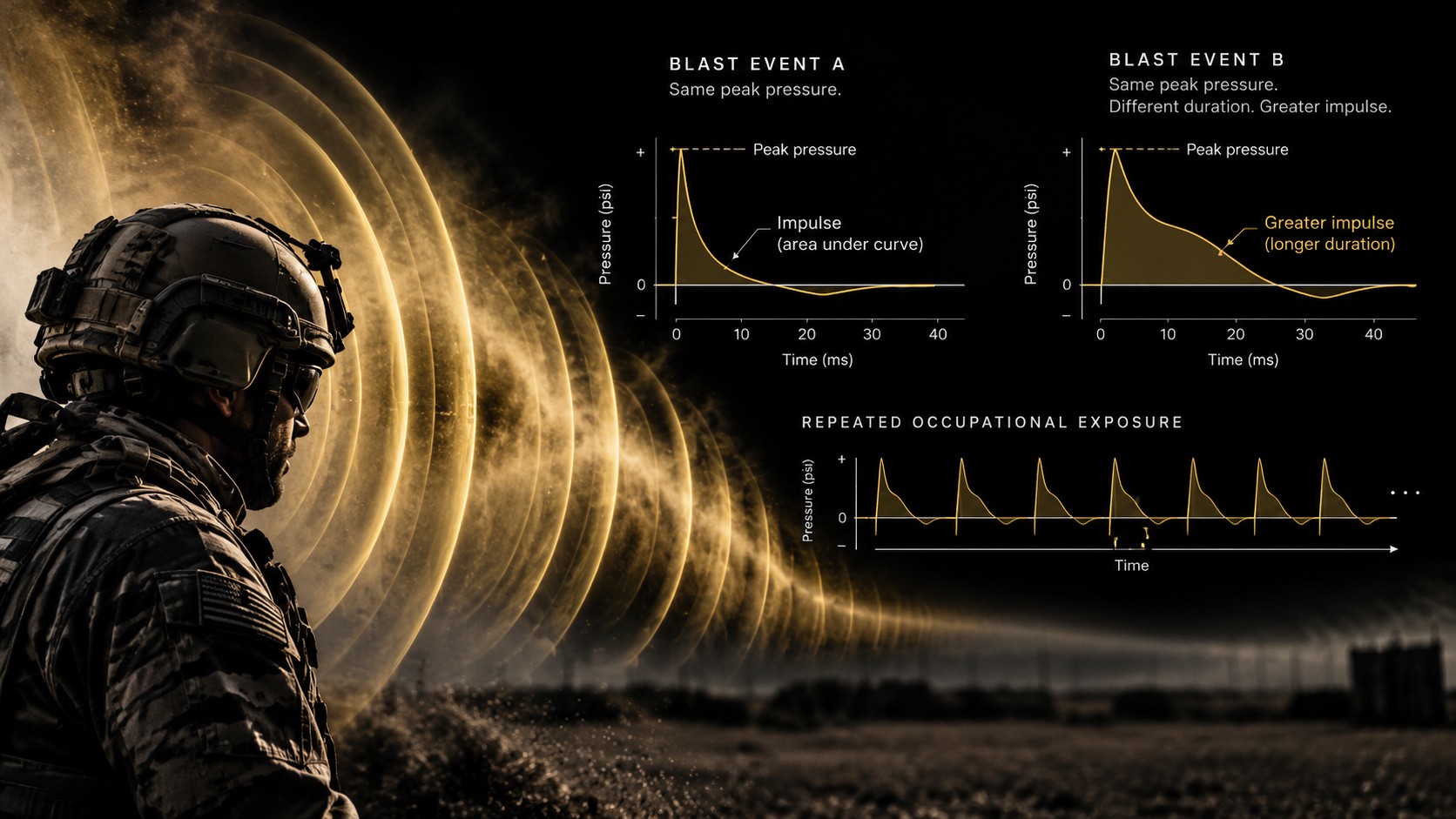
One thing is increasingly clear: blast exposure is influenced by far more than a single peak-pressure number.

Illustration: a warfighter facing an incoming blast wave, with conceptual charts showing two blasts with the same peak pressure but different impulse, and a series of repeated exposures over time
Illustration. Waveforms are conceptual and do not show measured data.
The variables

What shapes exposure

Operational studies have demonstrated that measurable blast exposure can change substantially based simply on where a warfighter stands, how the individual is positioned, and how far they are from the source.

That creates an engineering opportunity. If exposure is influenced by modifiable variables, then technologies, environments, equipment, and operational practices can potentially be engineered to reduce that exposure. That is the space OverPressured is pursuing.

Environment

Confined spaces, walls, vehicles and pits change how a blast wave behaves.

Position

Where the warfighter stands relative to the source and to reflecting surfaces.

Orientation

Which way the head and body face the blast changes what reaches them.

Reflection

Hard surfaces return blast energy back into the space, creating repeated arrivals.

Impulse

Pressure over time: every arrival adds up, not just the highest peak.

Duration

How long the pressure lasts, not only how high it peaks.

Repetition

Crews fire many rounds per day in training, day after day.

Cumulative exposure

The total dose a warfighter absorbs over a career.

The blast pathway

  1. 01Blast sourceThe initial pressure wave generated by weapons, explosives, breaching charges, or other blast-producing systems.
  2. 02 · HIVE6™EnvironmentStructures, vehicles, surfaces, geometry, and confinement can alter the way blast waves propagate and reflect.
  3. 03 · PELTA-6™IndividualPosition, orientation, proximity, equipment, and protective systems influence the localized exposure experienced by the warfighter.
  4. 04Exposure / doseThe dose that reaches the warfighter: peak pressure plus impulse, duration, repetition and accumulation over time.
  5. 05Potential outcomeThe biological and operational consequences of blast exposure remain an active area of scientific investigation.
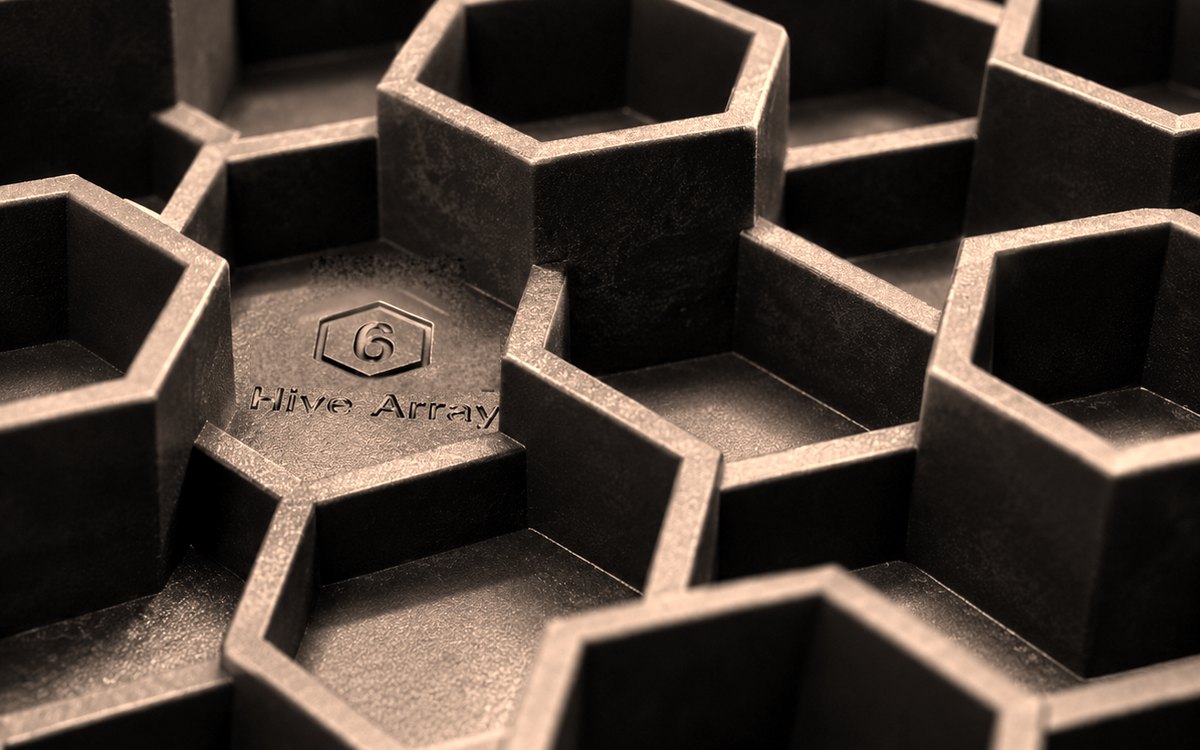
HIVE6 hex lattice array, close-up

HIVE6™

Addressing the Environment

A passive blast-mitigation technology engineered to disrupt and modify reflected blast-wave behavior within confined and reflective environments.

  • Open-cell geometric architecture developed to influence how blast energy propagates and reflects
  • Flexible, lightweight panels that are configurable for different spaces
  • Passive: no sensors, electrical power, software, or moving parts
Explore HIVE6™
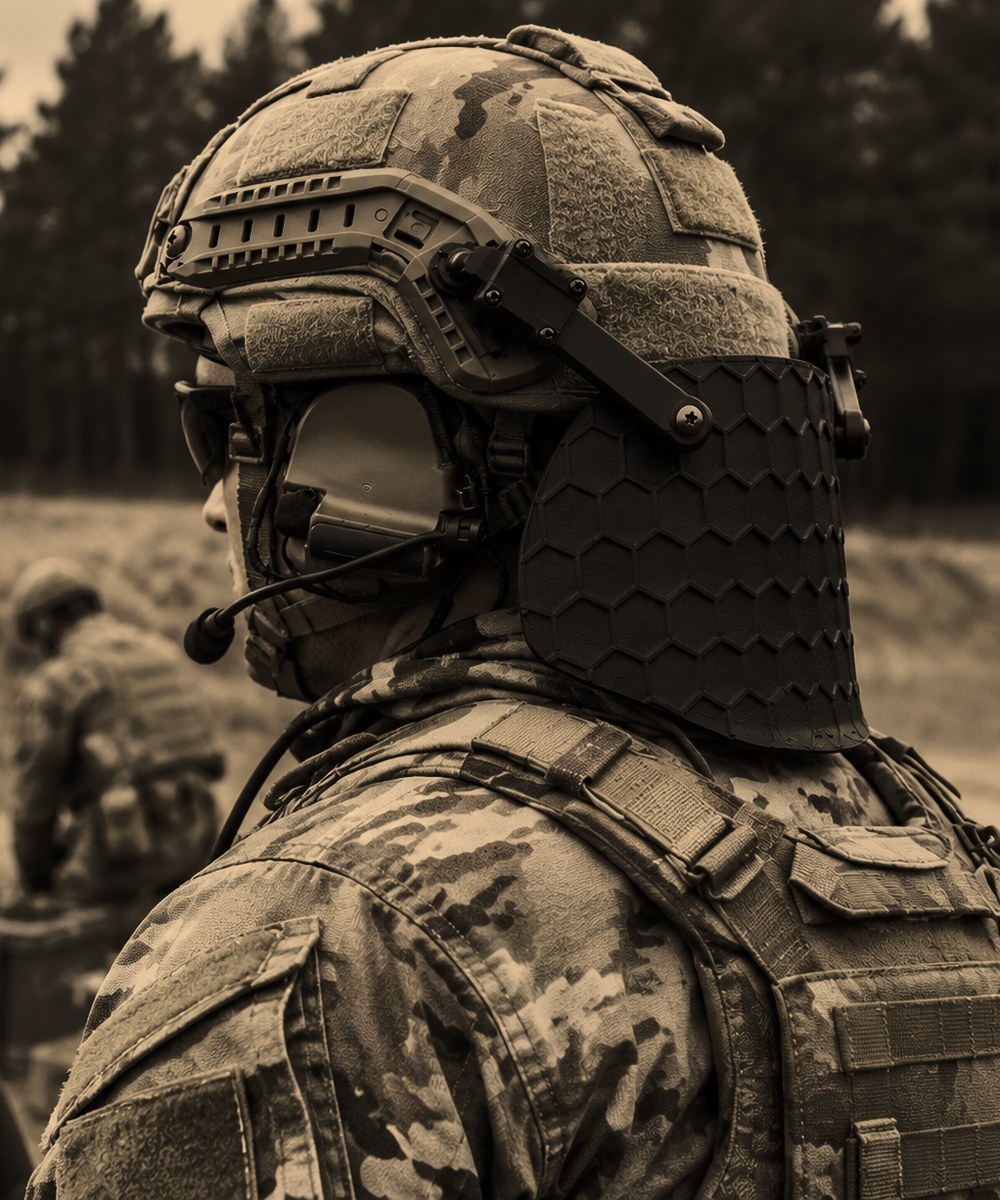
PELTA-6 shield mounted on a soldier's combat helmet in the field

PELTA-6™

Addressing the Individual

A helmet-integrated blast-mitigation technology engineered to reduce localized blast-overpressure exposure around the head, while preserving the operational function of the helmet system. It complements environmental mitigation rather than replacing it.

  • Shields the back of the head and neck, which the standard helmet leaves uncovered, from the blast wave
  • Integrates with existing helmet configurations. Contact us for details on helmet integration.
  • Preliminary field and laboratory testing completed
Explore PELTA-6™
Evidence philosophy

Evidence Before Claims.

Blast science is evolving quickly, and OverPressured evolves with it. We distinguish between what has been independently established, what we have directly demonstrated, what has been modeled, what has been observed experimentally, and what remains a development objective. That means being deliberate with language.

Modeled
A modeled prediction is identified as a modeled prediction.
Preliminary
A preliminary test result is identified as preliminary.
Demonstrated
An independently demonstrated result can be identified as demonstrated.
Designed to
An intended capability remains "designed to" until the evidence supports stronger language.

The goal is not simply to make stronger claims. The goal is to build stronger evidence.

How we develop

Research & Development

OverPressured combines blast physics, engineering, modeling, field testing, and collaboration across the wider blast research community, defense, academic and international, to develop practical approaches to blast-exposure mitigation. The development process is built around five principles.

Understand.Understand the exposure. Characterize the blast environment, pressure behavior, operational context, exposure pathway, and problem being addressed. Identify.Identify where intervention is possible. Determine where the pathway can realistically be modified without compromising the mission: the environment, equipment, individual protective systems, or operational configuration. Engineer.Engineer the solution. Develop practical technologies around the intervention point with the warfighter, mission, integration requirements, durability, and operational usability in mind. Measure.Measure the effect. Instrument the system and quantify what actually changes: peak pressure, impulse, pressure-time history, spatial distribution, frequency content, or other relevant engineering metrics. Validate.Validate the performance. Repeat testing, challenge assumptions, expand test conditions, and pursue independent validation.

HIVE6™ addresses the environment.

PELTA-6™ addresses the individual.

OverPressured addresses the problem.

Contact us